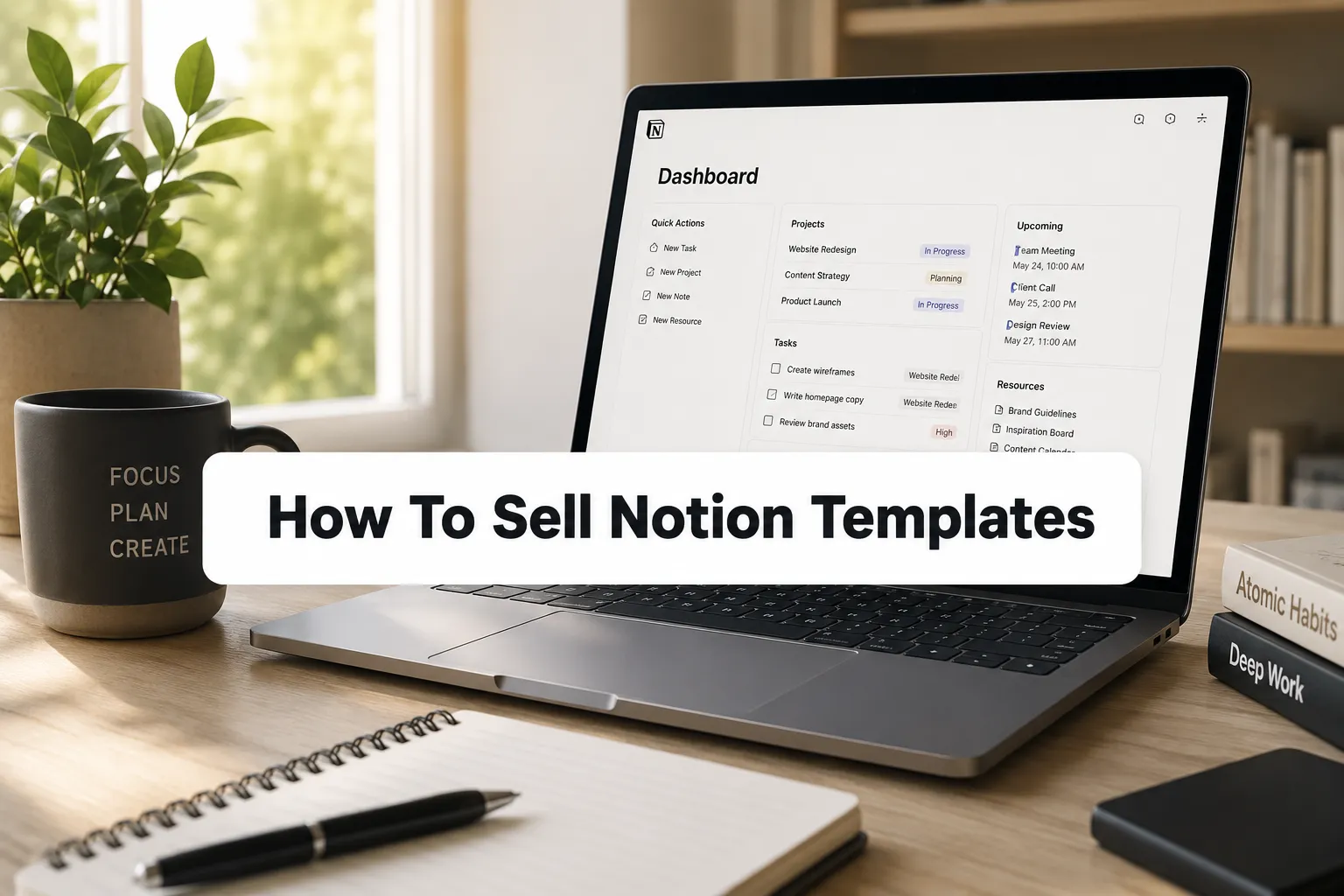
Earning passive income through digital products has emerged as a significant opportunity, with creators around the globe leveraging platforms like Notion to build and sell highly functional templates. To successfully understand how to sell notion templates as a beginner in 2026, you need to first identify a clear niche, design high-quality, user-friendly templates, choose the right selling platform, and implement effective marketing strategies to reach your target audience. The market is competitive, but with a strategic approach and focus on value, even newcomers can build a profitable digital product business.
Key Takeaways
- Identify a specific niche for your Notion templates to target a focused audience and stand out.
- Design high-quality, aesthetically pleasing, and genuinely useful templates that solve a problem.
- Select the most suitable platform for selling, such as Gumroad, Etsy, or your own website, considering ease of use and features.
- Develop a strong marketing strategy that includes social media, content marketing, and email lists.
- Price your templates competitively based on perceived value, complexity, and market rates.
- Provide exceptional customer support and gather feedback to improve your offerings.
- Continuously update and expand your template library to maintain relevance and attract repeat customers.
- Build a strong brand identity and unique selling proposition (USP) to differentiate yourself.
What are Notion Templates and Why Sell Them in 2026?

Notion templates are pre-built workspaces, dashboards, or systems within the Notion app that users can duplicate and customize for their own specific needs, offering a significant head start over building from scratch. Selling them in 2026 is an excellent opportunity for beginners because Notion’s user base continues to grow rapidly, creating a sustained demand for tools that enhance productivity, organization, and project management. These digital products require minimal upfront investment, offer high-profit margins since there are no physical goods, and allow for a passive income stream once created.
Notion, a versatile workspace tool, allows individuals and teams to organize notes, tasks, wikis, and databases in a highly customizable environment. A template is essentially a pre-configured Notion page or set of pages designed to address a particular use case, such as a content calendar, a student planner, a personal budget tracker, or a CRM system. Users purchase these templates to save time and benefit from expertly designed structures.
Selling Notion templates aligns well with the growing trend of digital entrepreneurship. As more people seek flexible income streams and businesses embrace remote work, the demand for efficiency tools like Notion grows. For beginners, this means:
- Low Barrier to Entry: You don’t need extensive coding skills or significant capital to start. Your creativity and understanding of user needs are your primary assets.
- Scalability: Once a template is created, it can be sold an infinite number of times without additional production costs.
- Passive Income Potential: After the initial effort of creation and promotion, sales can continue with minimal ongoing work, making it a viable option for how to make money online for beginners.
- Community Support: The Notion community is active, providing resources and inspiration for template creators.
Decision Rule: Choose to sell Notion templates if you enjoy organizing information, have an eye for design, and are passionate about helping others improve their productivity. This venture is less suited for those who prefer physical product sales or require immediate, high-volume revenue.
How to Sell Notion Templates: The Initial Steps for Beginners
To successfully sell Notion templates, beginners should begin by identifying a profitable niche and creating high-quality, problem-solving designs. This foundation ensures your templates meet a real need and stand out in a growing marketplace. Without a clear target audience and well-crafted products, marketing efforts will be far less effective.
The journey of becoming a Notion template seller involves several key initial steps:
1. Identify Your Niche
This is perhaps the most critical step. A niche helps you target a specific audience with particular needs, making your marketing more focused and your product more appealing.
- Brainstorm common pain points: What problems do people face in their work, studies, or personal lives that Notion could solve? (e.g., freelance project management, academic research organization, personal finance tracking, content creation scheduling).
- Leverage your expertise: Do you have experience in a specific field (e.g., marketing, education, real estate)? Create templates tailored to that industry’s needs. For instance, a “Freelance Client Tracker” could be very appealing to those looking for best selling Fiverr gig ideas.
- Research existing templates: See what’s already popular, but also look for underserved areas. Don’t just copy; innovate and add unique value.
Example Niche Ideas:
* Students: Academic planner, research paper organizer, thesis tracker.
* Freelancers: Client CRM, project management suite, invoice tracker.
* Content Creators: Social media content calendar, YouTube video planner, scriptwriter’s workspace.
* Small Business Owners: Employee onboarding, inventory management (for service-based businesses), meeting notes system.
* Personal Development: Goal setting dashboard, habit tracker, dream journal.
2. Design High-Quality, User-Friendly Templates
Once you have a niche, focus on building templates that are not only functional but also intuitive and aesthetically pleasing.
- Solve a real problem: Your template should genuinely make a user’s life easier or more organized.
- Prioritize user experience (UX):
- Simplicity: Avoid overcomplicating things. Start with the essentials and allow for customization.
- Clarity: Use clear headings, consistent formatting, and concise instructions.
- Aesthetics: A visually appealing template is more likely to sell. Use Notion’s styling options (colors, icons, covers) effectively.
- Include clear instructions: Provide a brief guide on how to use the template, duplicate it, and customize it. This reduces customer support inquiries and enhances user satisfaction.
- Test rigorously: Before selling, test your template extensively to ensure all features work as intended and that it’s genuinely useful. Get feedback from beta testers if possible.
Common Mistake to Avoid: Creating a template that’s too generic or tries to do too many things. This often results in a cluttered, confusing product that doesn’t appeal to anyone specifically. Focus on deep solutions for a narrow problem rather than shallow solutions for broad problems.
Choosing the Right Platform to Sell Notion Templates
Selecting the appropriate platform is crucial for effectively distributing your Notion templates and reaching your target audience. Your choice depends on factors like transaction fees, ease of setup, marketing tools, and brand control. Each platform offers distinct advantages for beginners looking to sell digital products.
Here are the most popular options:
1. Gumroad
Gumroad is a popular choice for digital product creators due to its simplicity and creator-friendly features.
- Pros:
- Easy Setup: You can create a product page in minutes.
- Low Maintenance: Gumroad handles payment processing, file delivery, and basic analytics.
- Audience Tools: Features like email list building and simple landing pages are integrated.
- Affiliate Program: Allows others to sell your products for a commission.
- Cons:
- Fees: Charges a percentage of sales, which decreases as you earn more.
- Discovery: Relies heavily on you driving your own traffic, as its marketplace isn’t as robust as others.
- Best For: Beginners who want a straightforward selling experience without needing to build a full e-commerce site. It’s excellent for testing the waters with minimal technical overhead.
2. Etsy
While known for handmade goods, Etsy has a significant market for digital products, including planners and templates.
- Pros:
- Massive Marketplace: Access to millions of active buyers already looking for creative solutions.
- Established Trust: Customers trust Etsy for secure transactions.
- Marketing Tools: Built-in advertising options and SEO features specific to the platform.
- Cons:
- Competition: High competition for digital products means you need to stand out.
- Fees: Listing fees, transaction fees, and payment processing fees can add up.
- Niche Focus: While possible to sell Notion templates, Etsy’s primary audience might require specific marketing angles.
- Best For: Creators who want to tap into a large, established audience, especially if your templates have a strong aesthetic or a craft-like appeal. Think about how to sell on Etsy effectively for digital goods.
3. Your Own Website (e.g., Shopify, WordPress with WooCommerce)
Building your own platform offers maximum control and branding opportunities.
- Pros:
- Full Control: Complete ownership over your brand, design, customer data, and pricing.
- Higher Profit Margins: No platform-specific transaction fees (though payment processors have their own).
- Scalability: Integrate with other tools, build out extensive content, and diversify your offerings.
- SEO Benefits: You control your site’s SEO, potentially drawing organic traffic.
- Cons:
- Technical Overhead: Requires more technical knowledge to set up and maintain.
- Initial Investment: Domain, hosting, e-commerce platform subscriptions (like Shopify) can incur costs.
- Traffic Generation: You are solely responsible for driving all traffic to your site.
- Best For: Beginners serious about building a long-term brand, expanding their digital product line, and having complete control. Platforms like Shopify make how to make money dropshipping and other digital sales easier, but still require setup.
Comparison Table: Selling Platforms for Notion Templates
| Feature | Gumroad | Etsy | Your Own Website (Shopify/WooCommerce) |
|---|---|---|---|
| Ease of Setup | Very Easy | Easy | Moderate to Advanced |
| Transaction Fees | Variable (decreases with earnings) | Listing + Transaction + Payment Processing | Payment Processor Fees Only |
| Marketplace Access | Limited discovery | High (Millions of buyers) | None (You drive traffic) |
| Branding Control | Basic | Limited | Full |
| Marketing Tools | Basic email, landing pages | Built-in ads, SEO, social sharing | Unlimited (integrates with any tool) |
| Ideal For Beginners | Yes, for quick launch and testing | Yes, to tap into existing market | No, unless committed to long-term brand-building |
Edge Case: If you are primarily interested in building an audience first and then monetizing, platforms like Buy Me a Coffee or Patreon could also be considered, offering templates as exclusive content for supporters rather than direct sales. This often works best for creators who already have an established following.
Effective Marketing Strategies to Sell Notion Templates in 2026
Once your Notion templates are ready, effective marketing is key to reaching your target audience and driving sales. A multi-faceted approach, combining organic content with strategic promotion, will maximize your visibility and revenue. Think beyond just listing your product; engage and educate your potential customers.
1. Content Marketing
Creating valuable content is a powerful way to attract users interested in Notion and, by extension, your templates.
- Blog Posts: Write articles on “How to organize your life with Notion,” “Best Notion setups for freelancers,” or “Notion tips for students.” Naturally, weave in examples of how your templates solve specific problems.
- YouTube Tutorials: Create video walkthroughs of your templates, showing them in action. People love visual guides, and seeing the template’s functionality firsthand can be a huge selling point. This also helps with how to vlog without showing face if you prefer.
- Lead Magnets: Offer a small, free Notion template (e.g., a simple daily planner) in exchange for an email address. This builds your email list, which is invaluable for future promotions.
2. Social Media Marketing
Visual platforms are excellent for showcasing Notion templates.
- Instagram & TikTok: Create short, engaging videos or carousels demonstrating your templates. Use relevant hashtags like #notiontemplates, #notiontips, #productivityhacks, #digitalplanner. Focus on the “before and after” or “a day in the life” using your template. Consider trending sounds and formats. For more tips on this, explore how to make money on TikTok in 2026.
- Pinterest: Notion templates are highly visual, making Pinterest a perfect platform. Create eye-catching pins with mockups of your templates, clear calls to action, and links directly to your product pages.
- Twitter/X & LinkedIn: Share updates, tips, and links to your content. Engage in relevant conversations using industry hashtags.
3. Community Engagement
Become an active member of the Notion community.
- Reddit & Facebook Groups: Join Notion-focused subreddits and Facebook groups. Share helpful tips, answer questions, and occasionally (and appropriately) mention your templates as solutions. Do not spam. Focus on providing value first.
- Collaborate: Partner with other Notion creators or influencers to cross-promote templates or co-host workshops.
4. Email Marketing
Your email list is your most valuable asset.
- Build a List: Use lead magnets (free templates) and signup forms on your website or Gumroad page.
- Regular Newsletters: Share Notion tips, new template releases, discounts, and exclusive content with your subscribers. This keeps your audience engaged and ready to buy.
5. Paid Advertising (Optional for Beginners)
While not essential for beginners, paid ads can accelerate growth once you have a proven product.
- Google Ads: Target keywords related to Notion templates.
- Social Media Ads: Run targeted campaigns on platforms like Instagram or Pinterest, focusing on demographics and interests relevant to your niche.
Common Mistake: Marketing inconsistently or only when you have a new product. Continuous engagement and value provision are key to building trust and an audience over time. Aim to be present where your ideal customer spends their digital time, providing solutions and showcasing your expertise.
Pricing Your Notion Templates Competitively and Fairly
Pricing your Notion templates effectively involves balancing the perceived value, the complexity of the template, your target audience’s budget, and market rates. Overpricing can deter potential buyers, while underpricing undervalues your work and limits your income. A strategic pricing model ensures profitability and market acceptance.
Factors to Consider When Pricing
- Value Provided:
- How much time and effort does your template save the user?
- What specific problem does it solve, and how significant is that problem?
- Does it offer a unique solution not readily available elsewhere?
- Templates that offer significant productivity gains or complex systems can command higher prices.
- Complexity and Features:
- Is it a simple, single-page tracker or a comprehensive, multi-dashboard system with interconnected databases?
- Templates with more advanced features, formulas, integrations (if applicable), and extensive documentation usually justify a higher price.
- Target Audience:
- Are you selling to students (typically budget-conscious), freelancers (willing to pay for efficiency), or small businesses (often have larger budgets for productivity tools)?
- Research what similar products are priced at for your specific demographic.
- Market Research:
- Look at what successful Notion template creators are charging. This gives you a baseline, but remember to consider their experience, branding, and template quality.
- Compare prices on platforms like Gumroad, Etsy, and dedicated Notion template marketplaces.
Pricing Models to Consider
- Flat Fee: A single price for the template. This is the most common and straightforward approach.
- Tiered Pricing: Offer different versions (e.g., Basic, Pro, Ultimate) with varying features or levels of support at different price points. This caters to a broader range of budgets and needs.
- Bundles: Group several related templates together at a discounted price compared to buying them individually. This increases the average order value.
- “Pay What You Want” (PWYW): Some creators use this, especially for introductory templates, with a suggested minimum price. This can attract a broad audience but might not maximize revenue.
- Subscription (Less Common for Single Templates): More suitable if you offer a membership that includes access to a library of templates, ongoing updates, and support.
Pricing Strategy Example:
Let’s say you’ve created a comprehensive “Freelancer Project Management Dashboard.”
- Initial Thought: $15.
- Review Value: It saves freelancers hours weekly, organizes clients, projects, and invoices. It replaces several disparate tools.
- Complexity: It’s a multi-page system with interconnected databases and custom views.
- Target Audience: Freelancers are often willing to invest in tools that boost efficiency and professionalism.
- Market Check: Similar complex dashboards sell for $25-$50.
Revised Price: Start with $35, offering an introductory discount to $25 for the first week. This allows you to capture early adopters with a lower price while establishing a higher perceived value.
Common Mistake: Setting a price and never adjusting it. The market evolves, and your templates improve. Be prepared to test different price points and analyze conversion rates. Regularly review your pricing to ensure it remains competitive and reflects the value you deliver. If you’re building a brand, consistent pricing across platforms for the same product reinforces its value.
Niche Ideas and Template Examples for Beginners in 2026
For beginners entering the Notion template market in 2026, focusing on specific niche needs can significantly increase your chances of success. Rather than creating generic templates, target particular user groups or specific problems, which makes marketing easier and allows for deeper value creation. The goal is to provide a tailored solution that users are actively searching for.
1. Student Productivity Suite
Students constantly seek better ways to manage their studies, assignments, and personal lives.
- Template Idea: An “Ultimate Student Hub” that includes a course planner, assignment tracker, reading list, note-taking system, and a GPA calculator.
- Why it works: Directly addresses academic pain points. Can be marketed through student forums, university groups, and platforms like TikTok or YouTube where students seek study hacks.
- Example Features:
- Automatic due date reminders.
- Color-coded subjects.
- Linked databases for notes and resources.
- Revision schedules.
2. Freelancer Client & Project Manager
Freelancers juggle multiple clients, projects, and administrative tasks. A dedicated Notion system can be a lifesaver.
- Template Idea: A “Freelance Business OS” with a client CRM, project pipeline tracker, invoice generator (simple), content planner, and task management system.
- Why it works: Solves critical business organization problems. Appeals to a professional audience willing to invest in tools that save time and reduce stress.
- Example Features:
- Client contact database with project history.
- Project status tracking (e.g., “Discovery,” “In Progress,” “Awaiting Payment”).
- Time tracking integration (if possible via Notion APIs or manual entry).
- Simple expense tracker.
- Can also be linked with virtual assistant jobs for beginners if targeting VAs.
3. Content Creator’s Hub
Content creation is a complex process involving ideation, planning, creation, and distribution.
- Template Idea: A “Digital Content Planner” for YouTube, blog, or social media. Includes content calendar, script outlines, asset management, and idea backlog.
- Why it works: Tailored to a growing industry of creators always looking for efficiency. Highly visual and can be showcased effectively on social media.
- Example Features:
- Status tracking for content pieces (“Draft,” “Editing,” “Published”).
- Platform-specific checklists (e.g., YouTube SEO elements).
- Social media promotion scheduler.
4. Personal Finance Tracker
Many individuals struggle with budgeting and financial planning.
- Template Idea: A “Budget & Savings Dashboard” including monthly budget, expense tracker, income tracker, debt payoff planner, and savings goals.
- Why it works: Addresses a universal need. Can be marketed to a broad audience looking to improve financial health.
- Example Features:
- Automated budget calculations (using Notion formulas).
- Visualization of spending categories.
- Goal tracking with progress bars.
5. Health & Wellness Journal
Notion can be a powerful tool for self-care and tracking personal progress.
- Template Idea: A “Mind & Body Wellness Journal” with habit tracker, mood journal, workout planner, meal planner, and reflection prompts.
- Why it works: Appeals to the self-improvement niche, which is consistently popular. Can be highly visual and motivating.
- Example Features:
- Customizable habit tracking with streaks.
- Linked databases for recipes and workout routines.
- Journaling prompts for mental clarity.
Recommendation for Beginners: Start with a niche you are personally familiar with or passionate about. This makes the design process more intuitive and allows you to create truly valuable templates based on real-world experience. Once you master how to sell Notion templates in one niche, you can expand.
Setting Up Your Sales Funnel and Delivery Process
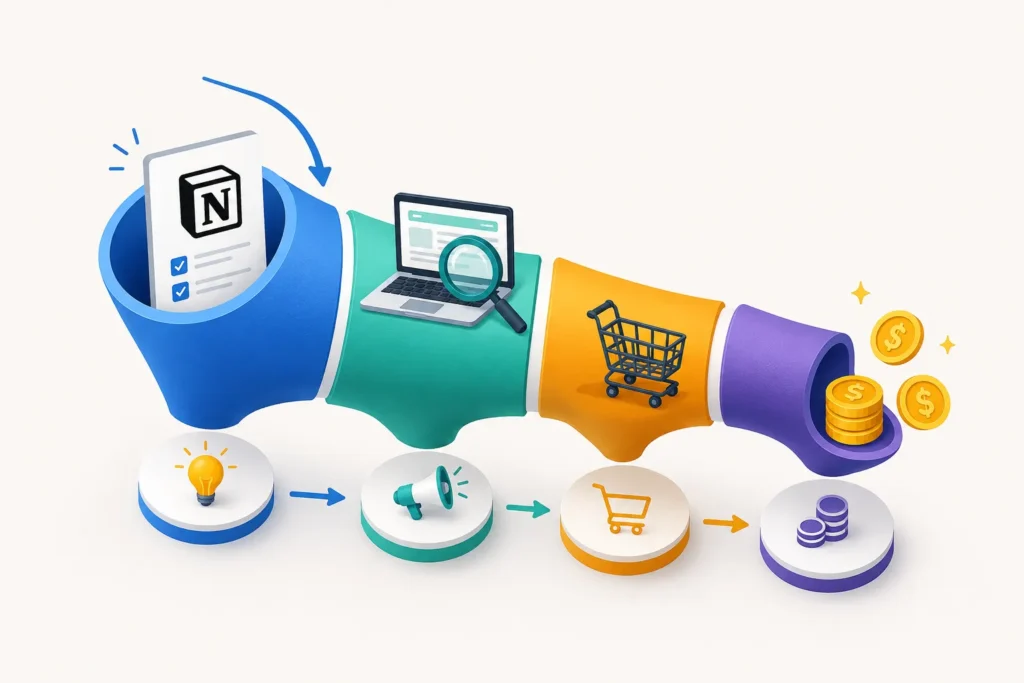
A streamlined sales funnel and efficient delivery process are essential for converting visitors into buyers and ensuring a smooth customer experience when you sell Notion templates. This involves attracting potential customers, guiding them through the purchase, and providing immediate access to their purchased template. Without a clear pathway, you risk losing sales and customer trust.
1. Attracting Customers
This is the top of your funnel, where you generate interest.
- Content Marketing: As discussed, blog posts, YouTube videos, and social media content showcasing your templates are crucial.
- SEO: Optimize your product descriptions and website content with keywords your target audience is searching for. If you have your own website, focus on strategies that make how to make money online for beginners via digital products more viable.
- Social Proof: Encourage early buyers to leave reviews or testimonials. Highlight these prominently on your sales pages.
2. The Sales Page
This is where the conversion happens. A compelling sales page is critical.
- Clear Headline: Immediately state what the template is and who it’s for.
- Benefit-Driven Copy: Focus on the results users will get, not just the features. (e.g., “Save 5 hours a week” instead of “Includes X number of databases”).
- High-Quality Visuals: Include screenshots, video walkthroughs, and mockups of your template in action. Show every part of the template.
- Call to Action (CTA): Make the purchase button prominent and clear (e.g., “Buy Now,” “Get Instant Access”).
- Testimonials: Embed positive reviews to build trust.
- FAQ Section: Address common questions and concerns to remove purchase barriers.
3. Secure Payment Processing
Your chosen platform (Gumroad, Etsy, Shopify) will handle this, but ensure it’s set up correctly.
- Stripe/PayPal Integration: Most platforms use these widely trusted payment gateways.
- Currency: Ensure your prices are displayed in relevant currencies if you target an international audience.
4. Automated Delivery of Templates
This is the beauty of digital products.
- Provide a Share Link: Notion templates are typically delivered by sharing a special “duplicate” link. When a user clicks this link, the template is automatically added to their Notion workspace.
- Clear Instructions: After purchase, provide clear, step-by-step instructions on how to access and duplicate the template. Include screenshots or a short video.
- Post-Purchase Email: Send a confirmation email with the duplicate link and support information.
5. Customer Support & Feedback Loop
Even after delivery, your involvement isn’t over.
- Responsiveness: Be prepared to answer questions about template usage or technical issues promptly.
- Feedback Collection: Ask for reviews and feedback. This helps you improve existing templates and identify ideas for new ones. You might include a simple survey link in your post-purchase email.
- Updates: If you update your template, consider how you’ll provide these updates to past customers (e.g., through an email list or a dedicated update page).
Common Mistake: Neglecting the post-purchase experience. A smooth delivery, clear instructions, and responsive support lead to happy customers, repeat purchases, and positive reviews, which are vital for long-term success in how to sell Notion templates.
Marketing and Promotion Strategies for Selling Notion Templates
Effective marketing and promotion are vital to getting your Notion templates discovered and purchased by the right audience. Simply listing your template is not enough; you need to actively showcase its value and reach potential customers where they spend their time online. A combination of organic and paid strategies can build brand awareness and drive sales.
1. Leverage Social Media Platforms
Visual platforms are highly effective for Notion templates.
- Instagram & TikTok: Create engaging short videos (reels, stories, TikToks) that demonstrate your templates in action. Showcase “day in the life” scenarios, “before & after” transformations, or quick tips using your templates. Use popular audio, relevant hashtags (#NotionTemplates, #ProductivityHacks, #DigitalPlanner), and interact with comments.
- Pinterest: Design aesthetically pleasing pins with clear mockups of your templates. Pinterest is a visual search engine, so optimize pin titles and descriptions with keywords like “Notion aesthetic templates,” “student planner Notion,” or “freelancer Notion dashboard.” Link pins directly to your sales page.
- YouTube: Create detailed walkthroughs, tutorials, and comparison videos of your templates. Show potential buyers exactly how the template works, its features, and the problems it solves. A strong visual demonstration builds trust and can convert viewers into buyers. You can also explore YouTube automation strategies to grow your channel.
2. Build an Email List
An email list is a direct line of communication to your most interested audience.
- Lead Magnet: Offer a free, valuable Notion mini-template (e.g., a simple habit tracker) in exchange for an email address.
- Newsletters: Regularly send emails with Notion tips, updates on your templates, new releases, exclusive discounts, and behind-the-scenes content. Nurture your audience and build a relationship.
3. Content Marketing & SEO
Attract organic traffic by providing value.
- Blogging: Write articles around Notion tips, productivity advice, or specific challenges your templates address. Naturally, integrate links to your templates where relevant. For example, an article on “5 Best Budgeting Apps in 2026” could mention your Notion budget template.
- Notion-Specific Communities: Engage in Reddit communities (e.g., r/Notion, r/NotionTemplates), Facebook groups, and Discord servers dedicated to Notion. Offer genuine help and advice; subtly introduce your templates as solutions when appropriate. Avoid blatant self-promotion.
4. Collaborate and Cross-Promote
Partnerships can expand your reach to new audiences.
- Other Creators: Team up with other Notion creators, digital product sellers, or productivity influencers for joint webinars, content creation, or cross-promotions.
- Affiliate Programs: If your selling platform (like Gumroad) offers an affiliate program, consider setting it up. This allows others to earn a commission for selling your templates, incentivizing them to promote your products.
5. Paid Advertising (Strategic Use)
Once you have validated your templates and identified your target audience, consider targeted ads.
- Social Media Ads: Run campaigns on Instagram, Facebook, or Pinterest targeting users interested in productivity, digital planning, specific professions (e.g., freelancers, students), or Notion itself.
- Google Search Ads: Bid on keywords like “buy Notion templates,” “Notion financial planner,” or “best Notion project manager.”
Key Principle: Consistency is paramount. Regular posting, engagement, and value creation across your chosen channels will gradually build your brand and authority, making it easier to sell Notion templates. Don’t expect overnight success; it’s a marathon, not a sprint.
Providing Excellent Customer Support and Gathering Feedback
Outstanding customer support and actively seeking feedback are crucial for long-term success when selling Notion templates. This not only resolves issues for current buyers but also provides invaluable insights for improving your products, building a strong reputation, and fostering a loyal customer base. Satisfied customers become advocates, driving organic growth through word-of-mouth.
1. Proactive Support and Clear Instructions
Minimizing potential issues starts before customers even reach out.
- Comprehensive Documentation: Include a detailed guide or FAQ section with your template. Cover common questions like “How to duplicate the template,” “How to customize colors,” or “What if a formula isn’t working?”
- Video Tutorials: A short video demonstrating template setup and key features can prevent many basic queries.
- Access Instructions: Make it abundantly clear how customers access their purchase immediately after payment.
2. Responsive and Empathetic Customer Service
When customers do reach out, your response matters.
- Timeliness: Aim to respond to inquiries within 24-48 hours. A quick response demonstrates professionalism and care.
- Clarity and Patience: Explain solutions clearly, potentially with screenshots or step-by-step instructions. Remember, not everyone is a Notion expert.
- Be Empathetic: Acknowledge their frustration or problem. Even if you can’t solve it immediately, showing you understand goes a long way.
- Channels: Provide clear channels for support (e.g., an email address, a contact form on your website).
3. Soliciting and Acting on Feedback
Feedback is a gift that helps you grow.
- Post-Purchase Surveys: Send a brief survey a week or two after purchase. Ask about usability, what they like, what could be improved, and what other templates they might be interested in.
- Reviews and Testimonials: Encourage customers to leave reviews on your sales platform or directly on your website. Positive reviews build social proof.
- Direct Outreach: If a customer leaves a detailed review (positive or negative), consider reaching out to thank them or discuss their suggestions further.
4. Continuous Improvement and Updates
Use the feedback to make your templates even better.
- Bug Fixes: Address any reported bugs or broken links promptly.
- Feature Enhancements: Implement popular requests or add new functionalities that improve the template’s value.
- Version Control: Keep track of template versions. If you make significant updates, consider how to offer these to past customers (e.g., through an email list update).
- “Built in Public” Approach: Some creators share their development process or planned updates with their audience, building excitement and community.
Example Scenario:
A customer buys your “Notion Content Calendar” template but struggles to connect a specific database. Instead of just sending a link to a generic Notion help page, you could:
- Reply within 12 hours, acknowledging their issue.
- Provide a specific screenshot demonstrating the connection steps.
- Offer a short, personalized video Loom recording if the issue persists.
- Thank them for their feedback and note if this common confusion could lead to an improvement in your template’s instructions or design.
Importance: In a crowded market, exceptional customer support and a commitment to improvement differentiate successful sellers. It builds trust, fosters loyalty, and turns one-time buyers into repeat customers and brand advocates, which is crucial for long-term income stability when you sell Notion templates.
Related Articles
- 20 Best Digital Products To Sell In 2026 For Maximum Profit!
- How To Make Money Online For Beginners-15 Proven Ways
- 50+ Best Selling Fiverr Gig Ideas In 2026
- 21 Best Passive Income Apps To Make Extra Money In 2026
- 17 Best Side Hustles That Pay Daily In 2026
Conclusion
Selling Notion templates offers a fantastic opportunity for beginners in 2026 to tap into the growing demand for digital productivity tools and generate passive income. The journey, while requiring dedication, is accessible and rewarding. By meticulously identifying a niche, designing high-quality and user-friendly templates, selecting the right selling platform, and executing robust marketing strategies, you can establish a thriving digital product business.
Remember that continuous improvement and customer satisfaction are paramount. The digital landscape evolves, and staying attuned to user needs, gathering feedback, and regularly updating your offerings will ensure your long-term success. Start by solving a specific problem for a defined audience, build an exceptional product, and then focus on showcasing its value through consistent promotion. With these actionable steps, you are well-equipped to successfully navigate the market and build a profitable venture selling Notion templates.