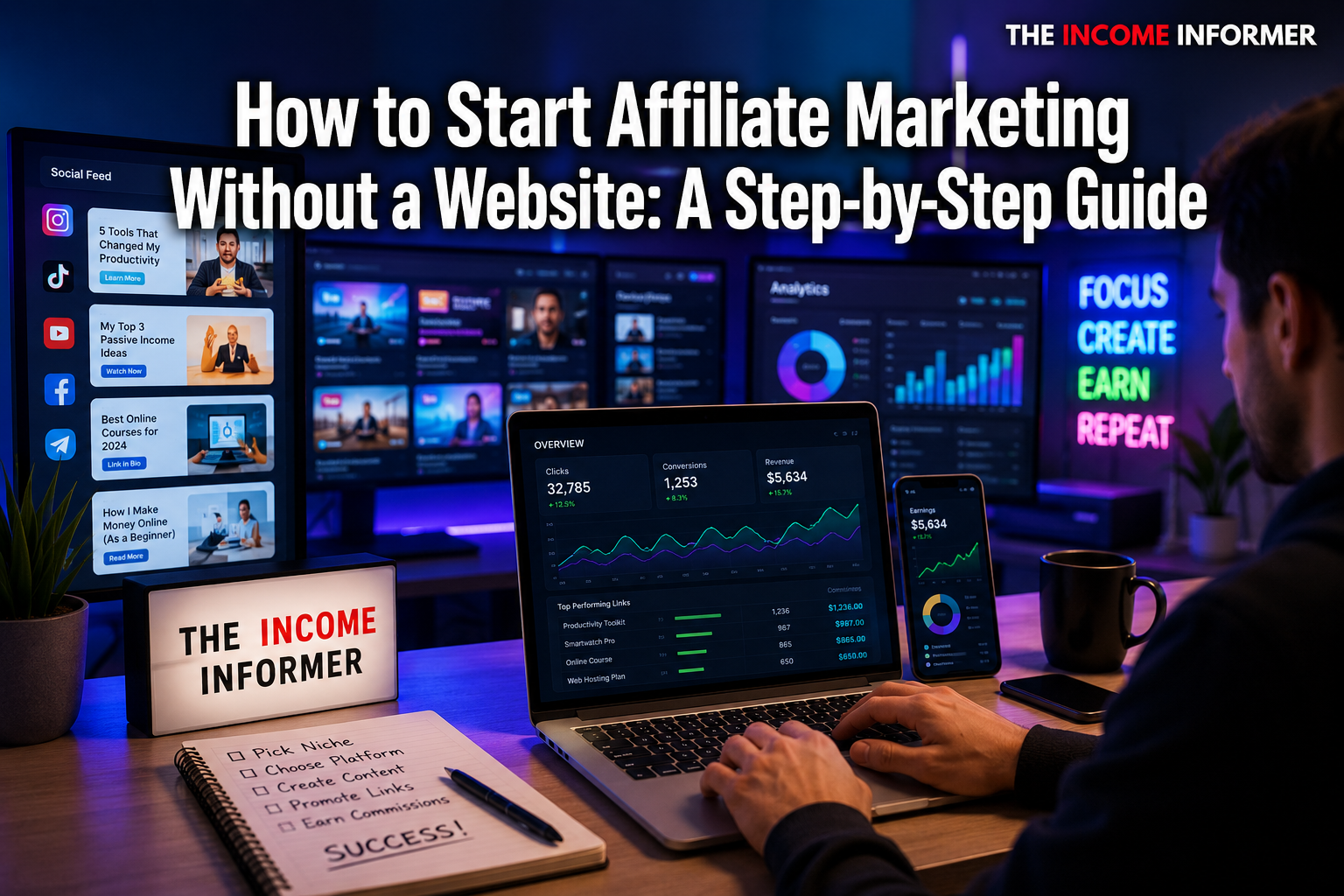
You absolutely can do affiliate marketing without a website and build a profitable online business in 2026. This approach focuses on leveraging existing platforms like social media, email, and online communities to promote products and earn commissions, making it an accessible entry point for beginners with little to no upfront investment.
Key Takeaways
- Affiliate marketing without a website is a legitimate and proven way to earn income online, especially for beginners.
- Leverage social media platforms like TikTok, Instagram, and YouTube Shorts for free organic traffic.
- Email marketing, even without a website, can build a direct connection with your audience and drive conversions.
- Utilize landing pages and bridge pages to guide potential customers and collect leads without needing a full site.
- Focus on high-quality content and audience engagement to build trust and generate sales.
- Choose affiliate programs wisely, prioritizing relevance to your chosen niche and audience.
- Always disclose your affiliate relationship to maintain transparency and trust.
- Start small, test different strategies, and scale what works to maximize your earning potential.
Can You Do Affiliate Marketing Without a Website in 2026?
Yes, you can absolutely do affiliate marketing without a website in 2026, and it’s one of the most accessible entry points for beginners looking to generate income online without significant upfront investment. This method relies on strategically using existing digital platforms and tools to drive traffic to your affiliate offers, proving that you don’t need a complex site to build a profitable online business.
The notion that you must have a website for affiliate marketing is outdated. While a website offers many benefits, it’s not a prerequisite for success. Many successful affiliates operate entirely through social media, email lists, and other content platforms. The key is to direct traffic to your unique affiliate links through engaging content and strategic promotion. This approach is particularly appealing to those in a tight spot financially or anyone keen on discovering how to earn money online without investment.
How to Choose the Right Niche and Products
Choosing the right niche and products is crucial for success in affiliate marketing without a website, as it dictates your audience, content strategy, and earning potential. To make this decision, focus on areas you are genuinely interested in, where there’s an active audience, and where high-quality affiliate products exist.
This initial step is foundational. A well-chosen niche means you’ll enjoy creating content and be more knowledgeable, which translates into better recommendations and higher trust from your audience.
Steps to Niche and Product Selection:
- Identify Your Passions and Expertise: What topics do you genuinely enjoy discussing? What problems can you solve for others? Your enthusiasm will shine through, making your content more engaging. For example, if you love fitness, that could be your niche.
- Research Market Demand: Even if you’re passionate, there needs to be an audience. Use tools like Google Trends or simply observe popular topics on social media platforms to see what people are searching for and engaging with.
- Evaluate Competition: Some competition is good; it shows market demand. Too much, however, can make it hard to stand out. Look for niches where you can bring a unique perspective or target a specific sub-segment.
- Find Relevant Affiliate Programs: Once you have a niche, search for products and services that naturally fit. Look at popular affiliate networks like ShareASale, CJ Affiliate, or Impact Radius. For instance, if your niche is “easy remote jobs that pay well,” you might look for affiliate programs related to online course platforms or job boards. Don’t forget to explore programs from individual companies or SaaS products directly.
- Prioritize High-Converting and Reputable Products: Choose products you genuinely believe in and would use yourself. Look for good commission rates and positive reviews. High-ticket affiliate marketing programs can significantly boost your income, so consider those that align with your niche. Check out our guide on the “20 Best High Ticket Affiliate Marketing Programs (2026)” for ideas.
Which Platforms Are Best for Promoting Affiliate Products Without a Website?
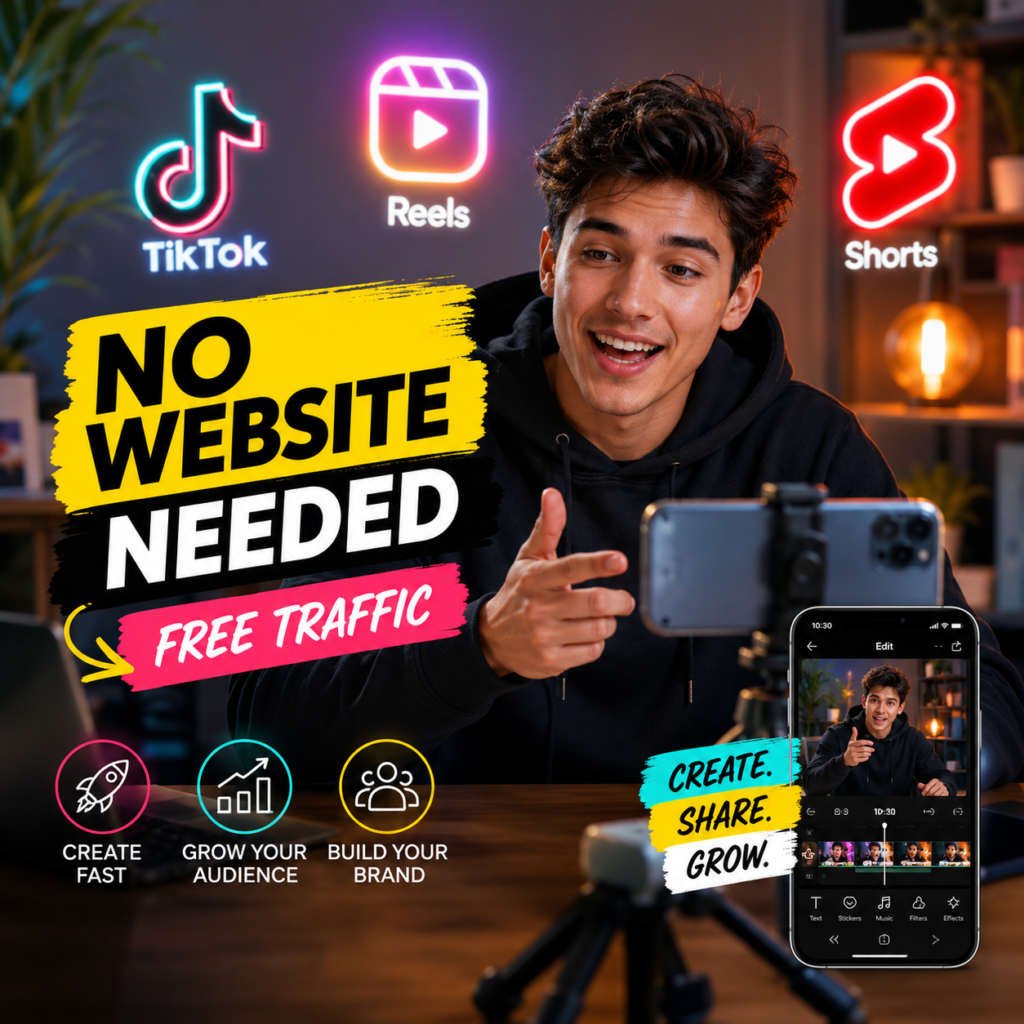
The best platforms for promoting affiliate products without a website are those that allow for direct communication, content creation, and link sharing, such as social media, email, and online communities. These platforms provide free or low-cost ways to reach an audience and drive traffic to your affiliate offers.
Utilizing diverse platforms allows you to tap into different audience segments and maximize your reach.
Top Platforms and Strategies:
- Social Media (TikTok, Instagram, YouTube Shorts):
- Strategy: Create short, engaging video content (reels, Shorts, TikToks) reviewing products, demonstrating their use, or sharing benefits. Use compelling call-to-actions (CTAs) to direct viewers to your link in bio or direct messages.
- Benefit: Huge organic reach potential, especially with trending audio and relevant hashtags. Visual content is highly engaging. This is a proven way to get traffic without a website.
- Example: A quick TikTok video showcasing how a productivity app helps you manage your schedule, with your affiliate link for the app in your bio.
- Email Marketing (without a website):
- Strategy: Use dedicated landing page builders (like Leadpages, ConvertKit landing pages) or even simple lead magnets (e.g., a free PDF guide) promoted on social media to collect email addresses. Then, nurture your list with valuable content and subtle product recommendations.
- Benefit: Direct communication channel, high conversion rates, and builds a loyal audience. You own your audience data.
- Consideration: You’ll need an email service provider (e.g., MailerLite, ConvertKit) but can often start with free tiers. For more ways to earn online, explore “How To Earn Money Online Without Investment (Proven Ways)“
- Online Communities and Forums (Reddit, Facebook Groups):
- Strategy: Engage genuinely in relevant communities, provide value, and subtly introduce affiliate offers where appropriate and allowed by group rules. Focus on helping first, then recommending.
- Benefit: Highly targeted audience, builds trust quickly if done correctly.
- Caution: Avoid spamming; it will lead to bans. Always check community guidelines on affiliate links.
- YouTube (without a dedicated website):
- Strategy: Create longer-form video reviews, tutorials, or comparison videos. Place your affiliate links in the video description. You can grow a “faceless” channel if you prefer not to be on camera, check out “How To Vlog Without Showing Face In 2026.”
- Benefit: Strong search engine optimization (SEO) potential within YouTube, builds authority, and content has a longer shelf life.
- Pinterest:
- Strategy: Create visually appealing pins that link directly to your affiliate products or landing pages. Pinterest acts like a visual search engine, driving traffic from users looking for ideas and products.
- Benefit: High traffic potential, good for niches like fashion, home decor, recipes, or digital products.
- Medium or LinkedIn Articles:
- Strategy: Write articles providing value, insights, or tutorials related to your niche. Integrate affiliate links naturally within the content, disclosing them clearly.Benefit: Establishes expertise, reaches professional audiences (LinkedIn) or a broad reading audience (Medium).
How to Create Engaging Content Without a Blog
Creating engaging content without a blog involves focusing on direct, value-driven formats tailored for specific platforms like social media, video, or email. The goal is to capture attention quickly, provide solutions, and subtly lead your audience toward your affiliate offers.
Without a traditional blog, your content needs to be highly digestible and natively fit the platform you’re using.
Content Creation Strategies:
- Short-Form Video (TikTok, Reels, Shorts):
- Focus: Quick reviews, product demonstrations, “how-to” snippets, problem/solution scenarios.
- Key: Hook viewers in the first 3 seconds, use trending sounds, add text overlays, and include a clear call-to-action (e.g., “Link in bio to learn more!”).
- Example: A 30-second video demonstrating how a new kitchen gadget saves time, with a direct link to purchase in your profile.
- Image-Based Content (Instagram, Pinterest):
- Focus: High-quality visuals, carousels, infographics, before-and-after shots.
- Key: Use strong visuals that stand out. For Instagram, use compelling captions with relevant hashtags. For Pinterest, create visually striking pins that include clear text overlays.
- Example: A series of Instagram carousel slides breaking down “5 easy remote jobs that pay well,” each slide highlighting a different opportunity with a final slide directing to an affiliate resource.
- Email Newsletters:
- Focus: Value-packed tips, tutorials, personal stories, exclusive deals.
- Key: Build a relationship. Don’t just blast affiliate links. Provide genuine value, then subtly integrate product recommendations when they solve a specific problem for your subscribers.
- Example: A weekly email sharing productivity tips, with one tip revolving around a specific tool for which you’re an affiliate.
- Forum/Community Posts:
- Focus: Answering questions, offering advice, sharing personal experiences.
- Key: Be a helpful member first. Only share affiliate links when directly relevant to a question someone asked and when allowed by forum rules. Always disclose it’s an affiliate link.
- Example: On a Reddit thread about budgeting, you might recommend a financial tracking app you use, including your affiliate link, stating, “I’ve found this app really helpful for budgeting, full disclosure, this is an affiliate link.”
How to Drive Traffic to Your Affiliate Links Without a Website
Driving traffic to your affiliate links without a website primarily involves leveraging free and paid strategies on established platforms where your target audience already spends their time. The most effective methods focus on creating value, engaging with communities, and strategically placing your links.
Success here means consistent effort in getting eyeballs on your content and, subsequently, your offers.
Effective Traffic Generation Methods:
- Organic Social Media Growth:
- Strategy: Consistently create high-quality, engaging content on platforms like TikTok, Instagram, YouTube Shorts, and Pinterest. Use relevant hashtags, participate in trends, and interact with your audience.
- Benefit: Free traffic, builds community, and establishes your authority over time. This is a powerful, proven way for beginners to start.
- Tip: Focus on one or two platforms initially to master them before expanding.
- Internal Link: To uncover more platforms and strategies, check out “Top 20 Secret Websites To Make Money Online In 2026“.
- Paid Social Media Ads (Facebook, Instagram, TikTok Ads):
- Strategy: Run targeted ad campaigns directly to your affiliate offers or a simple landing page. You can target specific demographics, interests, and behaviors.
- Benefit: Fast results, scalable traffic, precise audience targeting.
- Consideration: Requires a budget and understanding of ad platforms. Start with small, test campaigns to optimize.
- Email List Building:
- Strategy: Offer a valuable lead magnet (e.g., a free guide, checklist, mini-course) in exchange for email addresses. Promote this lead magnet across your social media channels or via paid ads.
- Benefit: Builds a direct communication channel, higher conversion rates, and reduces reliance on platform algorithms.
- Tip: Services like ConvertKit or MailerLite offer free plans for beginners to start building an email list.
- Guest Posting on Relevant Blogs (rarely, but possible):
- Strategy: Find blogs in your niche that accept guest posts. Instead of linking to your own website, you might be allowed to link to a relevant affiliate product or your social media profile in your author bio, depending on their rules.
- Benefit: Authority building, exposure to a new audience.
- Leveraging Forums and Q&A Sites:
- Strategy: Actively participate in platforms like Reddit (subreddits), Quora, or industry-specific forums. Provide helpful answers to questions, and where genuinely relevant and permitted, include your affiliate link with a clear disclosure.
- Benefit: Highly targeted traffic from users actively seeking solutions.
- Caution: Spamming will get you banned. Focus on value first.
| Traffic Source | Pros | Cons | Best For |
|---|---|---|---|
| TikTok/Instagram Reels | Viral potential, free reach, visual | Short attention span, algorithm changes | Trendy products, quick demos, entertainment |
| Email Marketing | High conversion, owned audience, direct | Requires list building, initial setup time | Niche products, education, recurring offers |
| YouTube Videos | Longevity, high trust, strong SEO | Time-consuming to produce, competitive | Tutorials, in-depth reviews, evergreen content |
| Visual search, long-term traffic, passive | Requires strong visuals, niche-dependent | Fashion, home, DIY, digital products | |
| Facebook Groups | Targeted audience, community building | Strict rules, easy to be seen as spammy | Niche discussions, specific problem-solving |
| Paid Ads | Fast, scalable, precise targeting | Costly, learning curve, risk of loss | High-ticket items, quick launches, testing |
Using Landing Pages and Bridge Pages Effectively
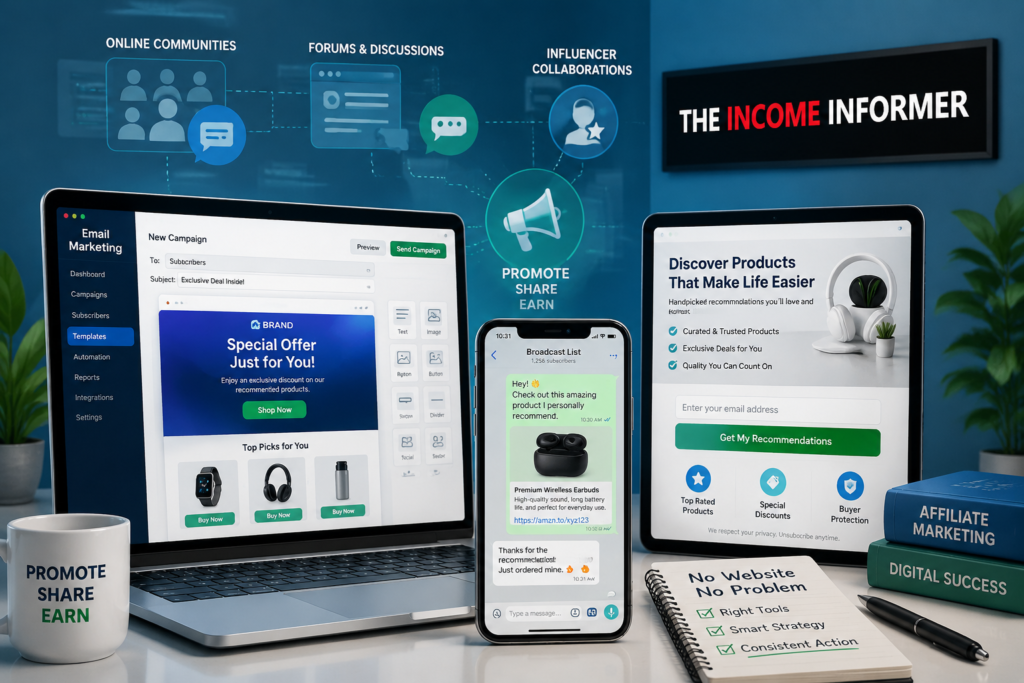
Landing pages and bridge pages are crucial tools for affiliate marketing without a website, acting as intermediaries between your traffic source and the merchant’s offer. They help pre-sell, gather leads, and provide necessary disclosures, all without requiring a full website.
These pages enhance the customer journey, build trust, and can significantly improve conversion rates compared to sending traffic directly to an affiliate link.
How to Utilize Landing Pages and Bridge Pages:
- Understanding the Difference:
- Landing Page: Designed to capture lead information (e.g., email address) in exchange for something valuable (a free guide, discount code). The primary goal is lead generation.
- Bridge Page (or Pre-sell Page): Acts as a “bridge” between your content and the affiliate offer. It provides more information, builds anticipation, addresses objections, or gives a more in-depth review before sending the user to the merchant’s site. It doesn’t typically collect leads.
- Why Use Them (especially without a website):
- Build Trust: You can add a personal touch, elaborate on benefits, and transparently disclose your affiliate relationship, which is vital for compliance and consumer confidence.
- Pre-sell: You can warm up your audience to the product, highlighting its unique selling points and how it solves their problem before they see the merchant’s sales page.
- Bypass Restrictions: Some platforms (like Facebook Ads) prefer not to send traffic directly to affiliate links. A bridge page provides an acceptable intermediate.
- Collect Leads: A landing page allows you to build an email list, which is a valuable asset for long-term income, as discussed in “How To Earn Money Online Without Investment (Proven Ways)”.
- Tools for Creating Pages:
- Leadpages: A popular, user-friendly drag-and-drop builder specifically for landing pages, often with free trials.
- ClickFunnels: More comprehensive, designed for building entire sales funnels, including landing and bridge pages.
- ConvertKit/MailerLite: Many email service providers now offer integrated landing page builders as part of their free or basic plans, perfect for beginners.
- Systeme.io An all-in-one marketing platform that includes free landing page and funnel builders.
- Key Elements of Effective Pages:
- Compelling Headline: Grabs attention and highlights the core benefit.Benefit-Oriented Copy: Focus on how the product solves the user’s problem, not just its features.Call-to-Action (CTA): Clear and prominent, telling the user exactly what to do next (e.g., “Get Instant Access,” “Learn More Here”).Disclosure: A clear statement that you may earn a commission, usually at the bottom of the page.Minimalistic Design: Avoid distractions; keep it focused on a single objective.
Building Trust and Authority Without a Website
Building trust and authority without a traditional website is achieved by consistently providing value, being transparent, and actively engaging with your audience across various platforms. Your personal brand becomes your “website,” demonstrating expertise and reliability through your content and interactions.
In the absence of a formal website, your reputation and the quality of your recommendations are paramount. People buy from those they trust.
Strategies for Building Trust and Authority:
- Be Genuinely Helpful and Value-Driven:
- Action: Answer questions thoroughly in forums, offer free tips on social media, create tutorials, or share insights in your emails. Focus on solving your audience’s problems without immediately pushing a product.
- Benefit: Positions you as an expert and a helpful resource, not just a salesperson.
- Example: On a Facebook group for aspiring remote workers, you could share proven ways to find captioning jobs for beginners, without immediately linking to an affiliate product, but establishing yourself as knowledgeable.
- Consistent and High-Quality Content:
- Action: Regularly post valuable content on your chosen platforms. Quality over quantity is key. Ensure your information is accurate, well-researched, and easy to understand.
- Benefit: Keeps your audience engaged and reinforces your expertise.
- Tip: Even without a blog, consistent short videos, image carousels, or email tips build a reliable presence.
- Transparency and Disclosure:
- Action: Always, always disclose your affiliate relationship. A simple “Full disclosure: I may earn a commission if you purchase through my link” is sufficient. Place it near your affiliate links.
- Benefit: Legally compliant and builds immense trust. Hiding it erodes credibility.
- Example: When promoting a product in a YouTube description, start with a disclaimer. When posting on social media, use #ad or #affiliate.
- Engage with Your Audience:
- Action: Respond to comments, messages, and emails. Ask questions and invite feedback. Be part of the conversation.
- Benefit: Fosters a sense of community, makes your audience feel heard, and strengthens loyalty.
- Showcase Social Proof (if available):
- Action: Share screenshots of positive comments, testimonials (with permission), or even your own success stories using the product.
- Benefit: Provides external validation for your recommendations.
- Personalize Your Brand:
- Action: Let your personality shine through. People connect with people, not faceless entities. Share your honest opinions and experiences.
- Benefit: Creates a deeper, more authentic connection with your audience.
Common Mistakes to Avoid When Starting Affiliate Marketing Without a Website
Starting affiliate marketing without a website offers great accessibility, but it also comes with specific pitfalls that beginners often encounter. Avoiding these common mistakes can save you time, effort, and prevent you from losing your audience’s trust.
Understanding these missteps upfront is key to building a sustainable and profitable online business.
Mistakes to Steer Clear Of:
- Spamming Affiliate Links:
- The Mistake: Posting raw affiliate links everywhere without providing context, value, or disclosure.
- Why it’s Bad: It looks unprofessional, gets you banned from platforms/groups, and instantly destroys trust. Your audience will see you as solely interested in making a quick buck.
- Solution: Focus on providing value first. Integrate links naturally where they genuinely help or answer a question, always with disclosure.
- Not Disclosing Affiliate Relationships:
- The Mistake: Failing to clearly inform your audience that you earn a commission from their purchases.
- Why it’s Bad: It’s unethical, can be illegal in many regions (e.g., FTC guidelines in the US), and completely shatters trust if discovered.
- Solution: Always use clear disclosures like “#ad,” “#affiliate,” or a short statement (“I may earn a commission if you buy through my link”) near every affiliate link.
- Promoting Irrelevant or Low-Quality Products:
- The Mistake: Joining every affiliate program under the sun and promoting products just for the commission, regardless of their quality or relevance to your audience.
- Why it’s Bad: Damages your credibility. If you recommend bad products, your audience won’t trust your next recommendation.
- Solution: Be selective. Only promote products you genuinely believe in, have used yourself (if possible), and that truly serve your audience’s needs.
- Inconsistent Content Creation:
- The Mistake: Posting sporadically or disappearing for long periods.
- Why it’s Bad: Your audience forgets about you, algorithms deprioritize your content, and it’s harder to build momentum.
- Solution: Create a content schedule and stick to it. Consistency builds anticipation and keeps your audience engaged. Even a few high-quality posts a week can make a difference.
- Ignoring Platform Rules:
- The Mistake: Violating terms of service for social media platforms, forums, or email service providers, especially regarding direct affiliate linking or promotional content.
- Why it’s Bad: Leads to account suspensions, content removal, or even permanent bans.
- Solution: Read and understand the rules of each platform you use. Adapt your strategy to comply. Often, bridge pages are helpful here.
- Not Building an Email List:
- The Mistake: Relying solely on social media algorithms, which you don’t control, to reach your audience.
- Why it’s Bad: Social media reach can disappear overnight. You don’t “own” your audience on these platforms.
- Solution: Prioritize building an email list from day one. It’s your most valuable asset for long-term income, as highlighted in “How To Make 500 Fast: 10 Legitimate Ways”.
- Lack of Patience and Persistence:
- The Mistake: Expecting overnight riches and giving up when results aren’t immediate.
- Why it’s Bad: Affiliate marketing, especially without a website, takes time to build an audience and trust.
- Solution: View it as a marathon, not a sprint. Be persistent, learn from your failures, and adapt your strategies. Consistency pays off.
Maximizing Your Earning Potential: Tips and Tricks for 2026
Maximizing your earning potential in affiliate marketing without a website in 2026 involves smart strategy, continuous learning, and optimizing your approach. It’s about working smarter, not just harder, to turn your efforts into significant income.
By implementing these tips, you can scale your efforts and build a truly profitable online business.
Strategies for Maximizing Earnings:
- Focus on High-Ticket Affiliate Programs:
- Tip: Instead of just promoting low-cost items with tiny commissions, seek out programs that offer higher payouts per sale (e.g., software, online courses, high-end physical products). A single high-ticket sale can equal dozens of low-ticket sales.
- Benefit: Requires fewer sales to reach your income goals, making it more efficient.
- Resource: Explore our guide on the “20 Best High Ticket Affiliate Marketing Programs (2026)” to find suitable options.
- Diversify Your Traffic Sources:
- Tip: Don’t put all your eggs in one basket. If one social media platform changes its algorithm, your income could disappear. Actively build an audience on multiple platforms (TikTok, YouTube, Pinterest, email).
- Benefit: Provides stability and expands your reach to different audience segments.
- Build an Email List from Day One:
- Tip: Even without a website, use landing page builders or lead magnets on social media to capture emails. This is your most valuable asset, giving you direct access to your audience regardless of platform changes.
- Benefit: High conversion rates, allows for evergreen promotions, and builds long-term loyalty.
- Master Your Chosen Platforms:
- Tip: Instead of being mediocre on many platforms, become an expert on one or two. Understand the nuances of the algorithm, what content performs best, and how to engage effectively.
- Benefit: Leads to higher engagement, better organic reach, and more conversions.
- Leverage User-Generated Content (UGC):
- Tip: Encourage your audience to share their experiences with the products you recommend. Reshare their content (with permission).
- Benefit: Builds social proof and authenticity, making your recommendations more compelling.
- Create Evergreen Content:
- Tip: Produce content that remains relevant over time, such as “how-to” guides, tutorials, or foundational product reviews.
- Benefit: Continues to drive traffic and sales long after its initial publication, providing passive income streams. YouTube videos, for instance, can have a very long shelf life.
- Analyze and Optimize:
- Tip: Track your clicks, conversions, and earnings. Which content pieces are performing best? Which platforms? Use this data to refine your strategy, discard what isn’t working, and double down on what is.
- Benefit: Data-driven decisions lead to continuous improvement and higher ROI.
- Stay Updated with Trends:
- Tip: The digital landscape changes rapidly. Keep an eye on new platforms, content formats, and marketing techniques. Being an early adopter can give you a significant advantage.
- Benefit: Ensures your strategies remain fresh and effective in the ever-evolving online world.
- Explore Upwork Alternatives for Lead Generation:
- Tip: While not directly affiliate marketing, platforms often associated with freelancing can sometimes be used to find clients who might be interested in solutions you promote as an affiliate. Or, if you offer services related to your niche, you can subtly introduce affiliate products.
- Benefit: Diversifies your approach and potentially leads to multiple income streams.
By focusing on these actionable steps, you’re not just starting affiliate marketing; you’re setting yourself up for maximizing your earning potential and building a sustainable income online without needing a traditional website.
Conclusion
Starting affiliate marketing without a website in 2026 is not only possible but a highly encouraging and pragmatic path for anyone looking to build a profitable online business with minimal upfront investment. We’ve demystified the process, showing that by leveraging the power of social media, email, and strategic landing pages, you can effectively reach your audience, build trust, and drive conversions.
The journey requires dedication, an understanding of your chosen platforms, and a commitment to providing genuine value to your audience. Remember to select your niche and products wisely, craft engaging content tailored to each platform, and always, always maintain transparency through clear disclosures. Avoid common pitfalls like spamming or ignoring platform rules, and you’ll be well on your way.
To truly maximize your earning potential, focus on high-ticket programs, diversify your traffic sources, and prioritize building an email list your most valuable asset. By embracing consistency, adapting to trends, and continually analyzing your results, you’ll be equipped with proven ways to succeed. The digital world is brimming with opportunities, and this step-by-step guide empowers you to tap into them, proving that legitimate ways to make money online are accessible to everyone, without needing a single line of website code.
Frequently Asked Questions (FAQs)
1. Is it really possible to succeed in affiliate marketing without a website?
Yes, it is absolutely possible. In 2026, many successful affiliate marketers rely entirely on social media platforms like TikTok and Instagram, email lists, or online communities to drive traffic. While a website is a valuable long-term asset, you can build a profitable business by leveraging the massive organic reach of existing platforms.
Short-form video platforms like TikTok, Instagram Reels, and YouTube Shorts are currently the best for beginners. They offer high organic reach without requiring an existing following, allowing you to showcase products and direct users to your affiliate links through your “link in bio” or direct messages.
3. Do I need to pay for ads if I don’t have a website?
No, you don’t need to pay for ads. You can generate significant traffic through organic (free) methods like creating engaging social media content, participating in forums like Reddit, or building an email list. Paid ads are an optional way to scale faster once you have a strategy that is already converting.
4. What is a “bridge page,” and why do I need one?
A bridge page is a simple, single-page landing site that sits between your social media post and the affiliate offer. It helps “warm up” the visitor by providing more context, building trust, and disclosing your affiliate relationship. It is also useful for bypassing platform restrictions that sometimes block direct affiliate links.
5. How do I disclose my affiliate links without a website?
Transparency is key for both trust and legal compliance. You should include a clear disclosure near your link. On social media, you can use hashtags like #ad or #affiliate. In emails or on landing pages, a simple sentence such as “I may earn a commission if you purchase through this link at no extra cost to you” is sufficient.